In this blog, we’re diving into understanding towing safety equipment. Getting this right means a much safer towing experience.
When I started camping with an RV, there was a lot to learn about towing safety, including a myriad of new equipment to become familiar with. This can be a bit overwhelming at first. In this installment, we’ll cover the basics of trailer tires, brake controllers, tire pressure monitor systems, and towing mirrors and cameras.
Tires
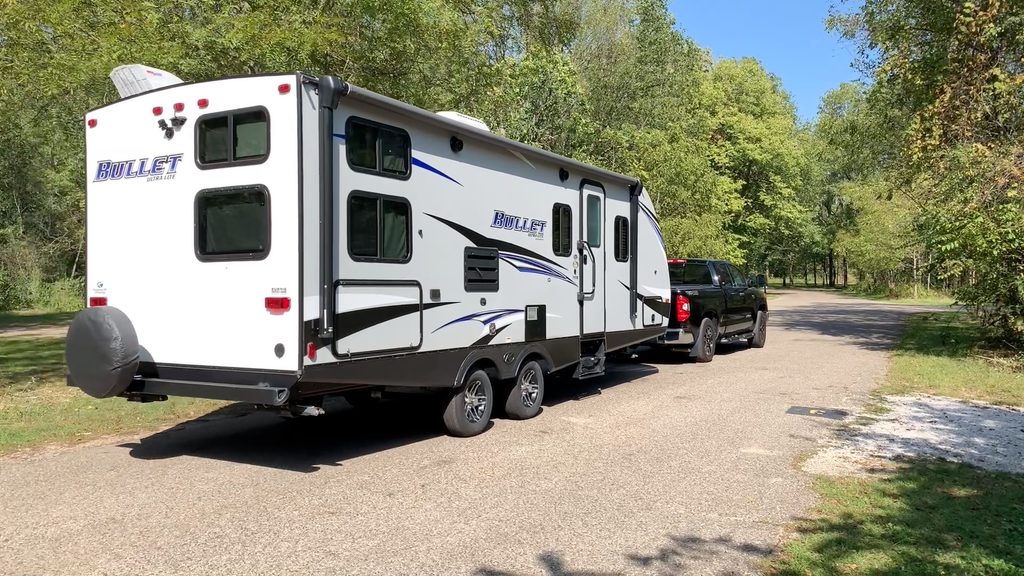
Trailer tires are your most important safety equipment, and it’s vital to understand what this means. Having a tire blow out at speed is very dangerous to you and others. The key is understanding your trailer tires ratings and operating within those parameters. We have an entire video on the subject that we will link to, but here are the main points.
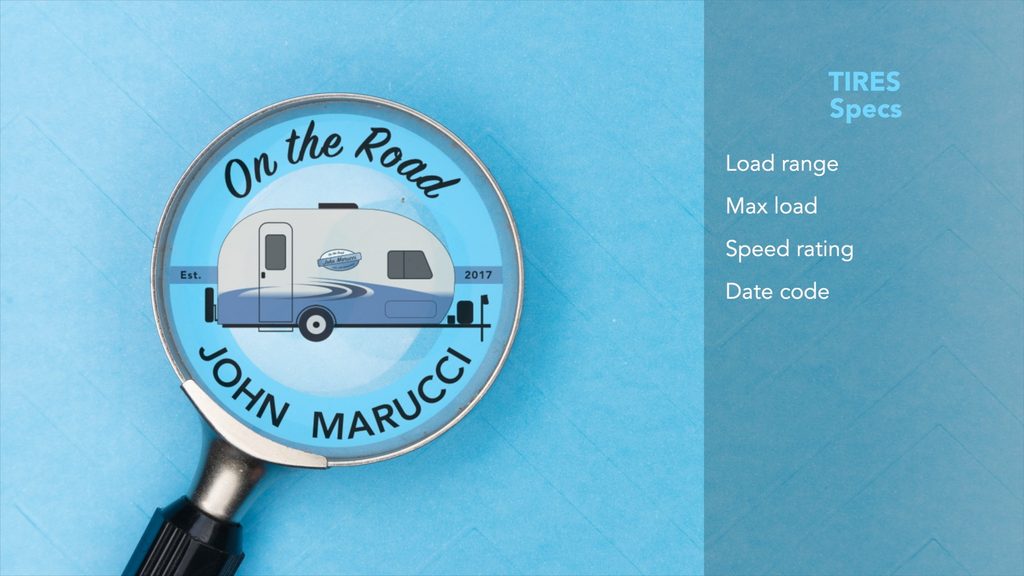
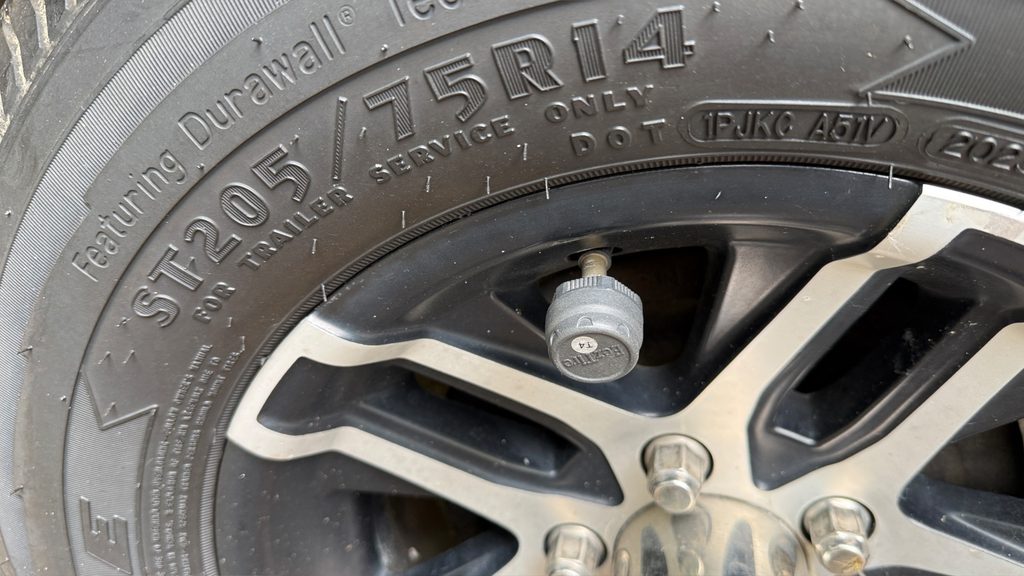
Every trailer tire has a load range, max load, speed rating, and a date code printed on the tire side wall.
For Load range, higher letters equate to being able to carry heavier loads. For example, a ‘C’ rated tire, usually with a max 50 psi rating, can carry less weight than a ‘D’ rated tire with a max 65 psi. For a prior trailer I owned, with a ‘C’ rated tire, each tire was only rated for 2,540 lbs. or 5,080 lbs. for the entire trailer. Safe towing requires that you know your trailer weight and don’t overload your tires. We have other towing videos on the channel that discuss trailer weight.
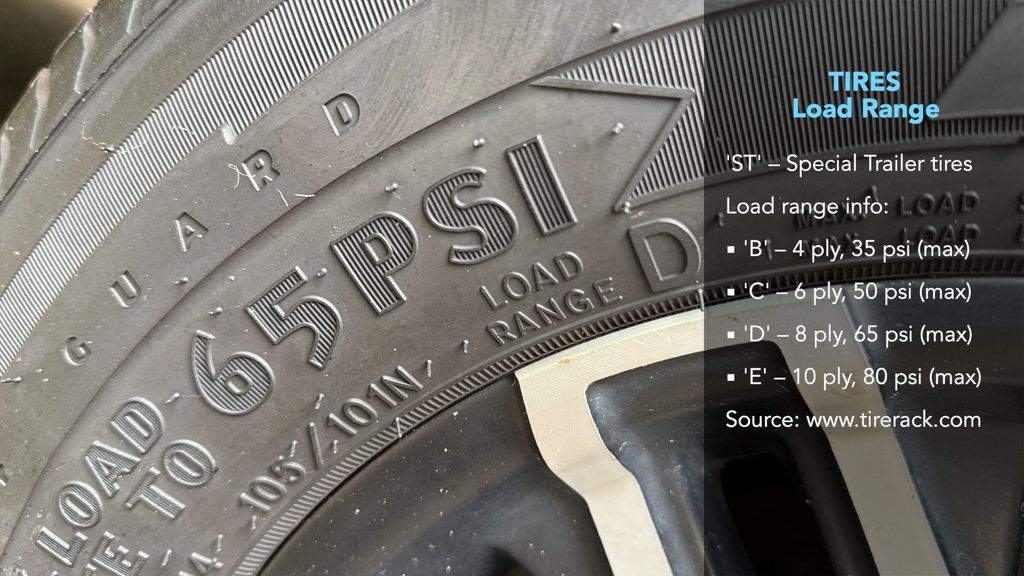
The same ‘C’ rated tires I owned had a speed rating of 65 mph, less than the speed limit on most interstate highways. Many ‘D’ rated tires have a speed rating of 75 mph, but you will want to look for the speed rating on the side wall of your trailer tires to confirm. Be aware that the speed rating is there for a reason and indicates the maximum safe speed at which a tire can operate under optimal conditions (proper inflation, load, and temperature). So, if you don’t have proper tire inflation or are overloaded in the trailer or the temperature is very hot, the speed rating is not applicable, and you should lower your speed or change the parameters.
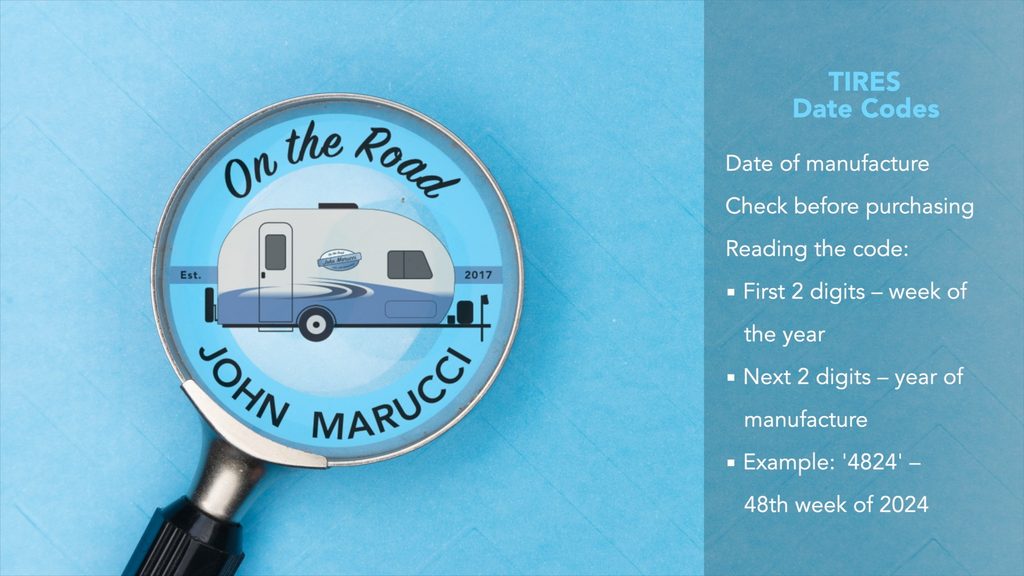
Next, let’s talk about tire date codes. RV tires are notorious for sitting long periods between usage, so knowing your tires date code, which is the manufacturing date of the tire, is vital. I once purchased new replacement RV tires from a local reputable tire shop and noticed that the date codes on a few of the tires was over a year old. The date code is the date of manufacture, so the tires had been sitting somewhere getting old for a while before they were sold. I did have them replace these old (new) tires with slightly newer ones at the time. Before a long RV trip in 2024, I noticed a large crack on a tire sidewall. The tires still had good tread and only had 15,000+ miles, but they had been mounted for almost five years, and they were not brand new from a date code perspective even then. This is an important point to remember: Most RV tires will wear out from age before they wear out from usage. Know your date codes and how old the tires are. Be sure to check them visually before each trip.
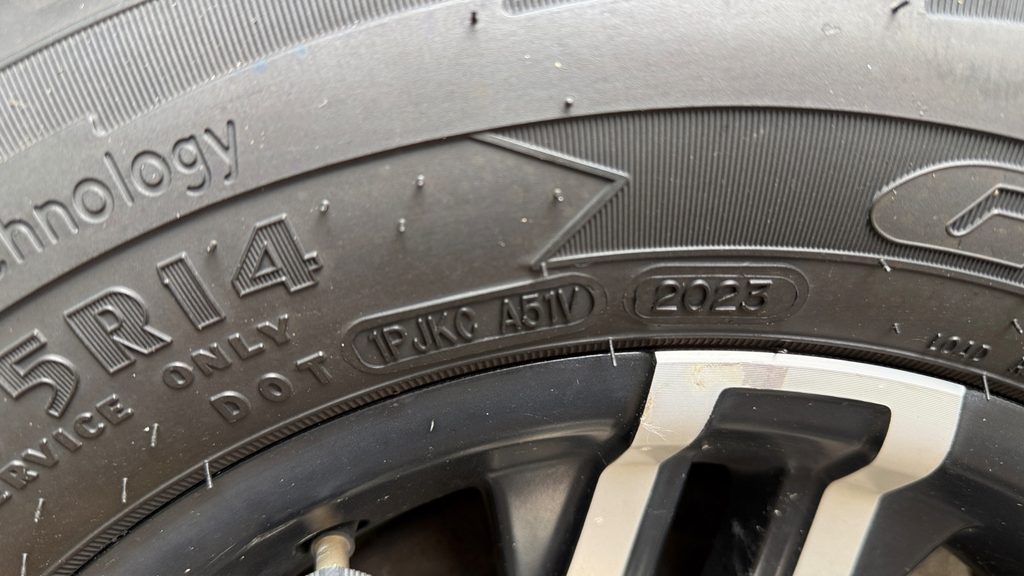
As far as the four-digit date code, here is how to decode it: The first two digits are the week of the year. The next two digits are the year. So, 4824 would be the 48th week of 2024, or late November 2024.
Lug Nuts
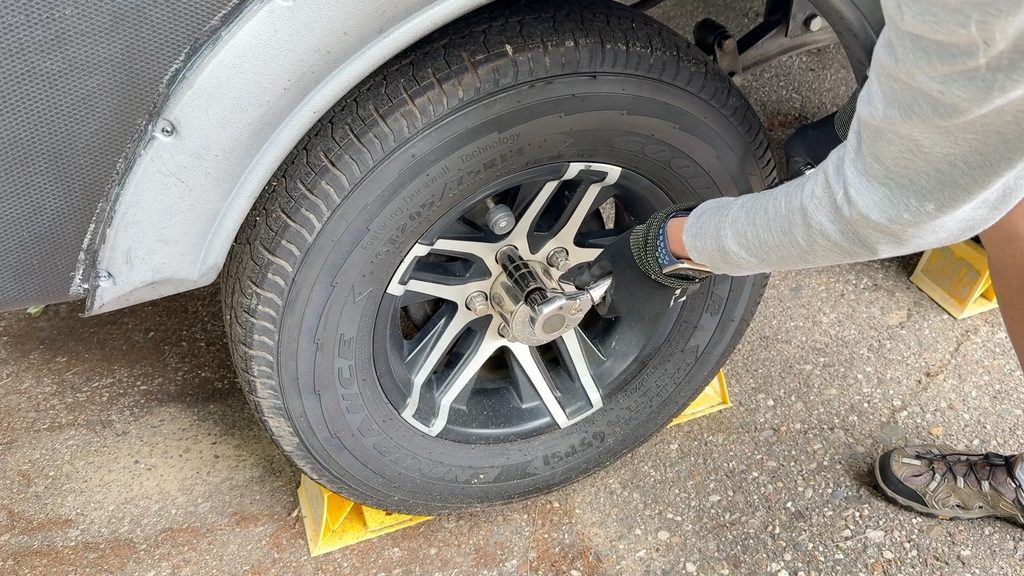
I’d be remiss if I didn’t talk briefly about torquing your trailer’s wheel lugs before each long trip. Your properly inflated tires won’t matter much if your wheels lugs come loose and fall off. You need to invest in a basic torque wrench to use before every long trip and ensure all your lugs are seated to the proper foot pound rating for the trailer (usually around 100 ft. lbs.). Make it a normal part of your departure checklist. The lugs can loosen over time.
Brake Controllers & TPMS
The next safety equipment to understand are trailer brakes, brake controllers, and tire pressure monitor systems. Most trailer brakes are activated from the electric signal from the tow vehicle’s brakes through a brake controller via the vehicle’s 7-Pin connector to the trailer’s brakes. Many trucks come with brake controllers, but some don’t; and many SUVs don’t have brake controllers and will need it installed before towing. Often, SUVs will also need the full 7-Pin connector installed.
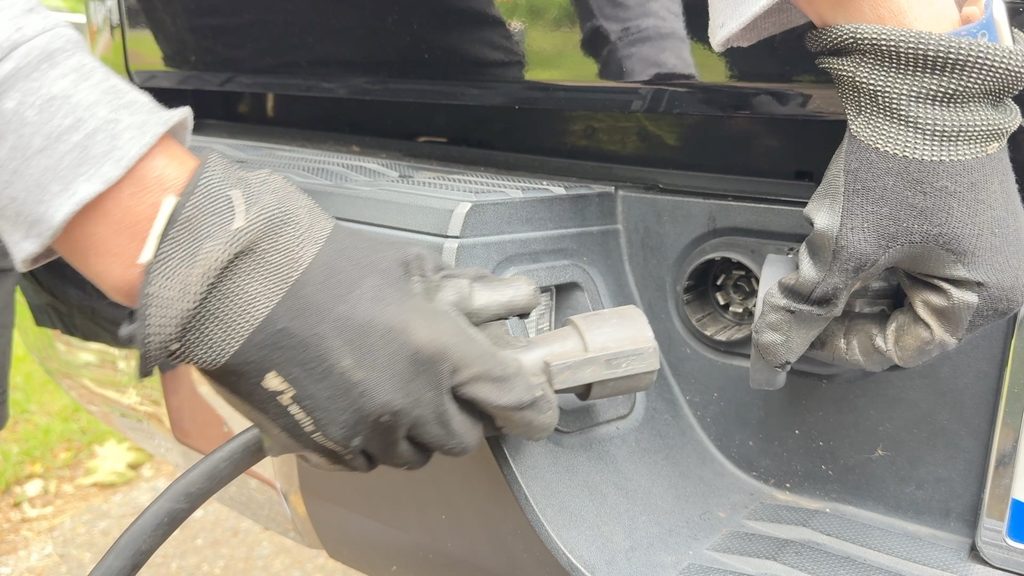
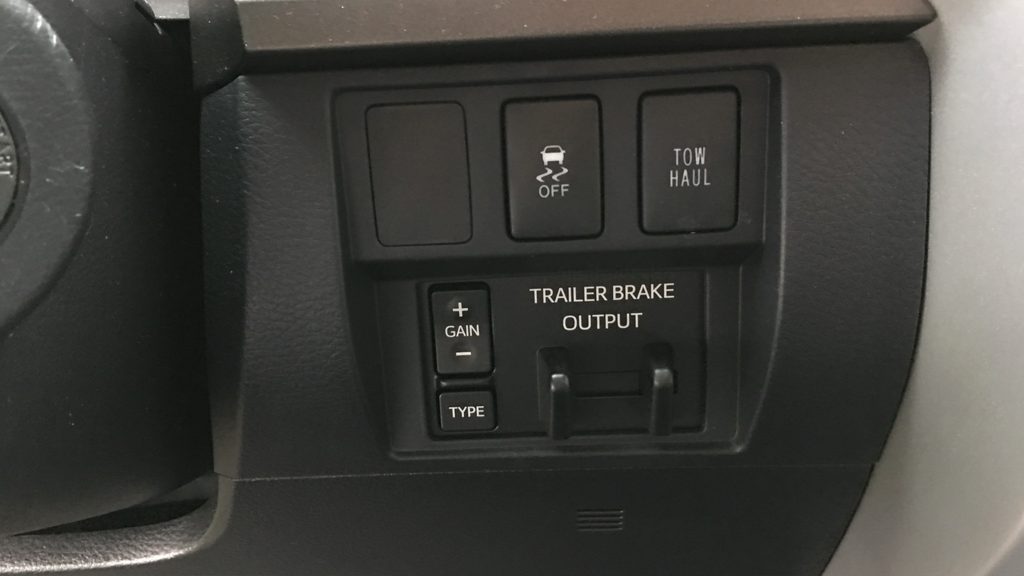
A brake controller is an electronic device that manages the braking system of a towed trailer. It works by detecting the tow vehicle’s brake application. It then sends proportional electrical signals to the trailer’s brakes, ensuring they activate smoothly and in sync with the tow vehicle’s to avoid jerky stops or trailer sway. The brake controller can be adjusted in intensity based on settings like gain (braking power), boost (quick-response surge), and mode (e.g., time-delayed or inertia-based for smoother control). This prevents the trailer from overriding the truck during stops, improving safety and control.
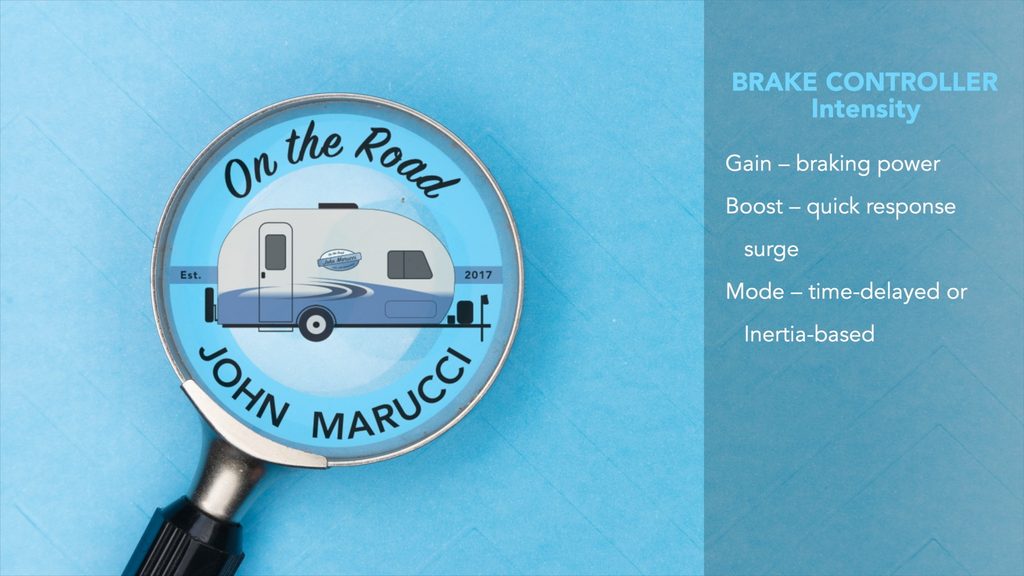
Basically, a brake controller syncs the trailer brakes to the tow vehicle brakes, so it harmonizes braking dynamics between vehicles. If you have a new trailer or new tow vehicle, you do need to hook it up and drive somewhere sparsely trafficked and test your brake controller settings and adjust your brake controller so it operates properly with your tow vehicle. You should feel your trailer brake when you apply the brakes on the tow vehicle, but not too much or too little.
TPMS
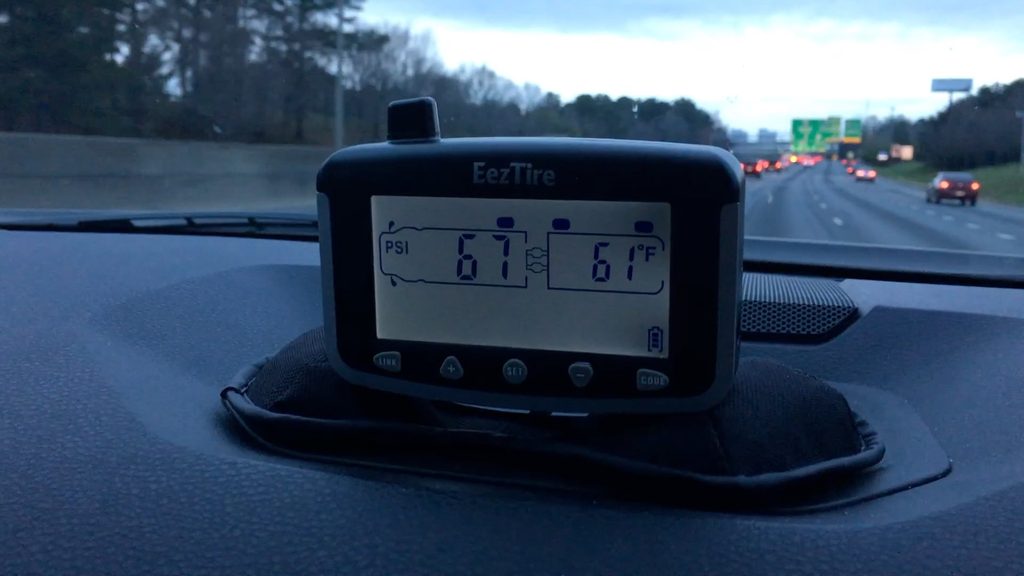
One of my favorite safety items is a Tire Pressure Monitor System or TPMS for short. I’ve used one since early 2018 and it has been a great comfort, especially on longer trips. The system has tire valve stem sensors for the trailer tires that wirelessly send psi and tire temp data to the head unit in my truck every few seconds. This means I always have a view into how my trailer tires are doing while traveling, both pressure and temperature. It has adjustable alarm settings, so I can be warned if tire pressure suddenly drops or temps get too hot. This is especially important to avoid a blow out, as the alarm will sound early, so you can pull over before something major happens. I highly recommend a TPMS for anyone towing, especially for longer trips.
Towing Mirrors & Cameras
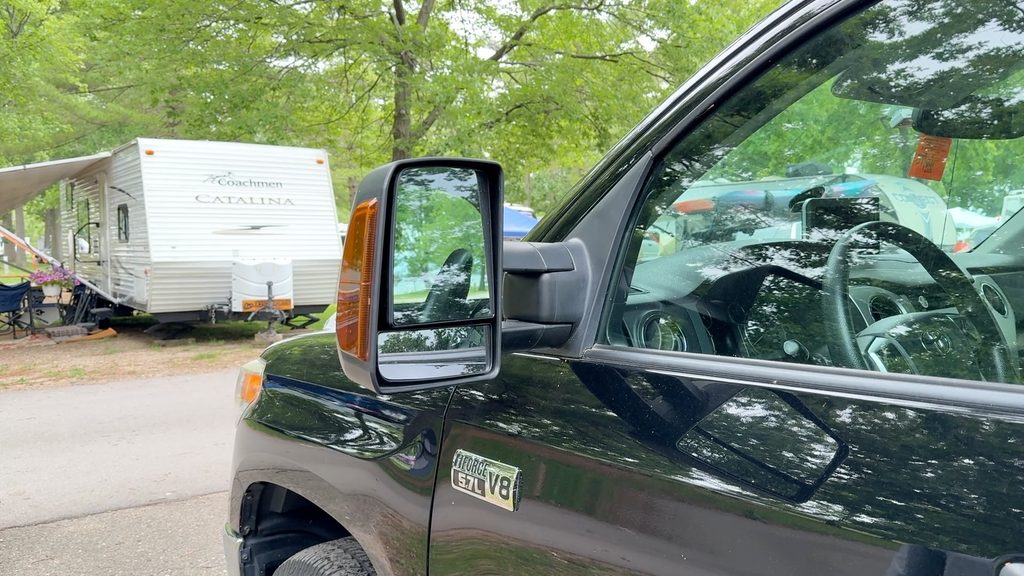
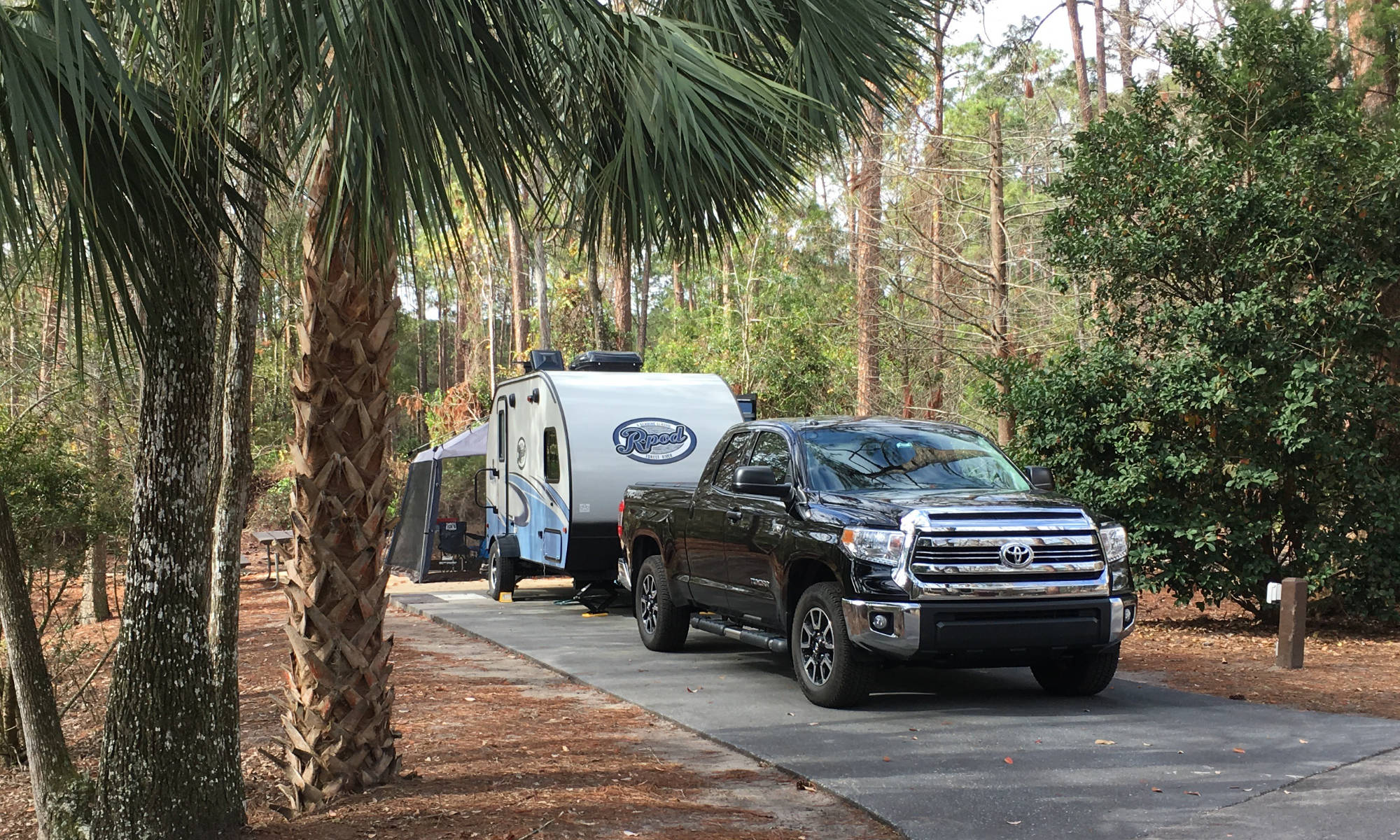
Finally, let’s discuss towing mirrors and towing cameras, both of which are important safety equipment. One of the smartest upgrades I made to my 2017 Toyota Tundra was to add towing mirrors. The wide-angle blind-spot mirror sits below the normal mirror and shows what if any vehicle may be in my blind spot. I always check these blind-spot mirrors before changing lanes. Honestly, I would be extremely uncomfortable towing without at least a basic towing blind-spot mirror. Many newer vehicles have full blind spot monitors or warning lights, which are highly recommended if they are available for your model year tow vehicle. If not, invest in towing mirrors.
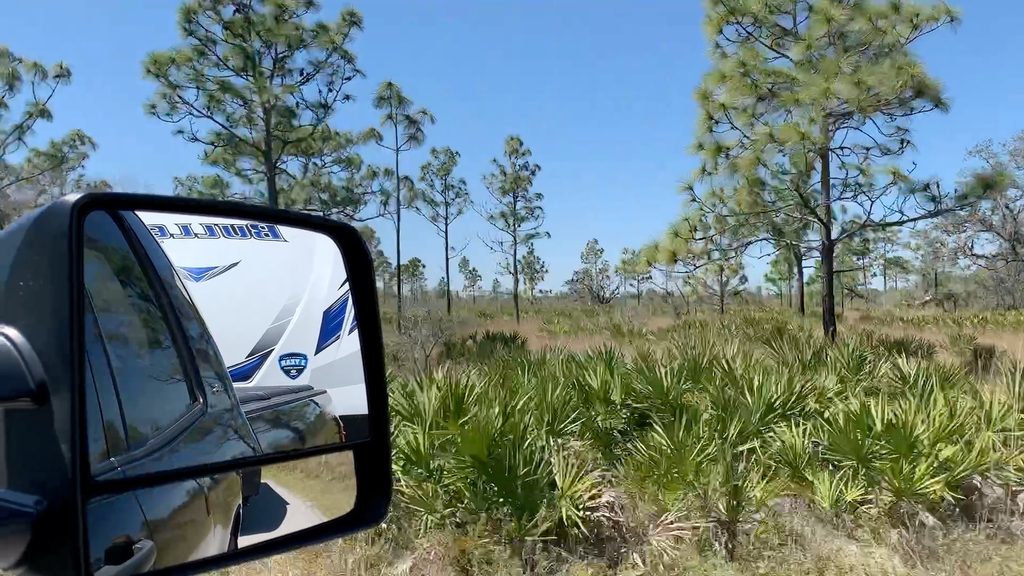
Towing cameras are another safety item that may come in handy. Some newer trailers have a full set of cameras that show blind spots as well as what is behind the trailer. These upgrades can get pricey, especially if purchased from the dealer, but they do give a view into what is around the trailer.
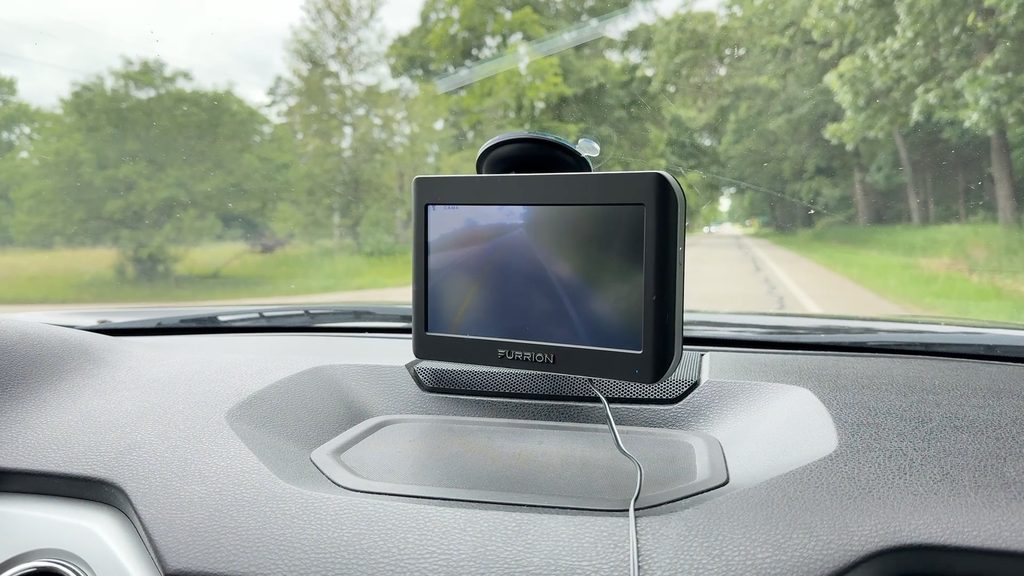
As far as having a rear-facing camera at the back of the trailer, I haven’t seen much value from seeing what is behind me while towing on the road, but it is extremely valuable when backing into a driveway or campsite. In this regard, it is worth having. Many of these camera systems are expensive, so weigh the costs vs. having good mirrors.
Okay, that will do it for this topic of towing safety equipment.
All the best in your camping adventures!
As always, thanks to our fans who support our efforts by starting their shopping from our Amazon Storefront and their generous financial support by using the THANKS feature located under each YouTube video ($ within the Heart icon). Your support is greatly appreciated!