
This blog, we’ll cover the latest RV and travel data news. July 2026 RV production numbers are out, and we’ll cover the latest travel data so you can better gauge if it’s time to buy, sell, or hold an RV. Later in the news, we’ll look at huge developments in the industry. I’m John Marucci; let’s get started with the news.
RVIA Numbers
On August 25th, 2026, the RVIA posted the latest RV wholesale shipment data for July 2026. Production was down compared to the prior year, with 19,948 total RVs shipped in July, down by 2,685 or 11.9% year-over-year. July 2026 was the lowest production July since before 2016. Compared to Year-to-Date 2025 volume of 213,338, 2026 through July is down by 29,746 to 183,592, or down by 13.9%. July YTD was also the lowest since before 2016.
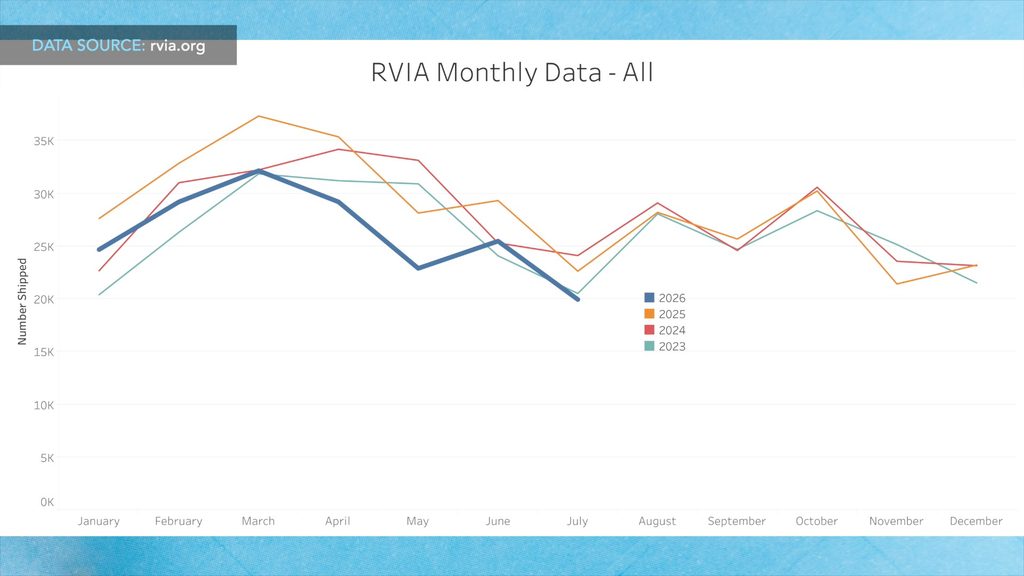
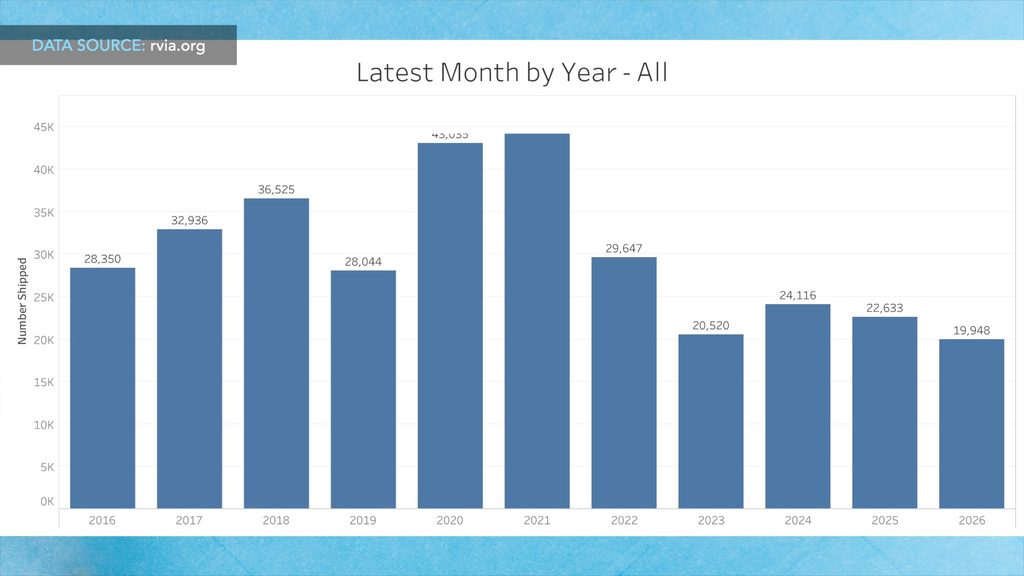
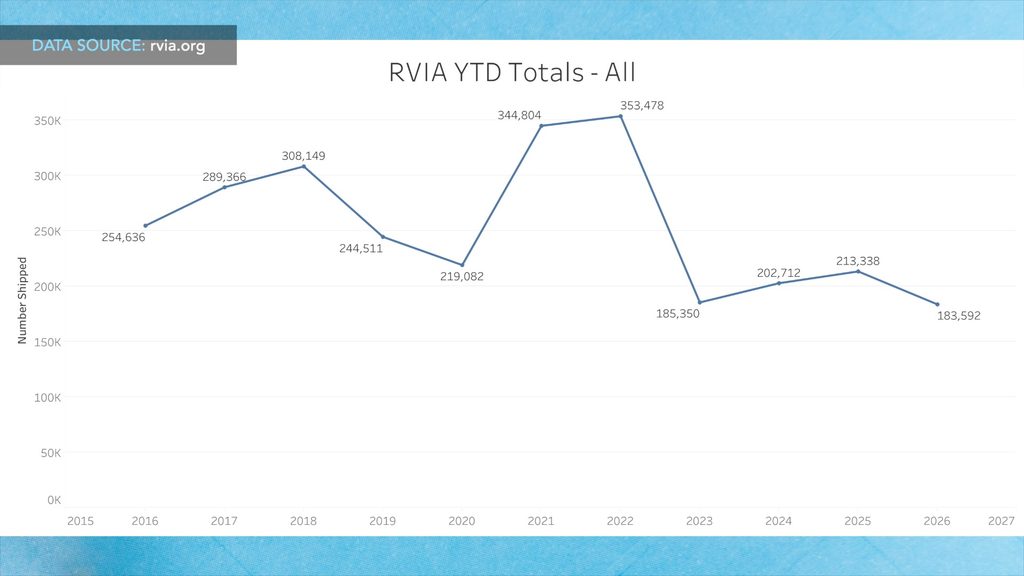
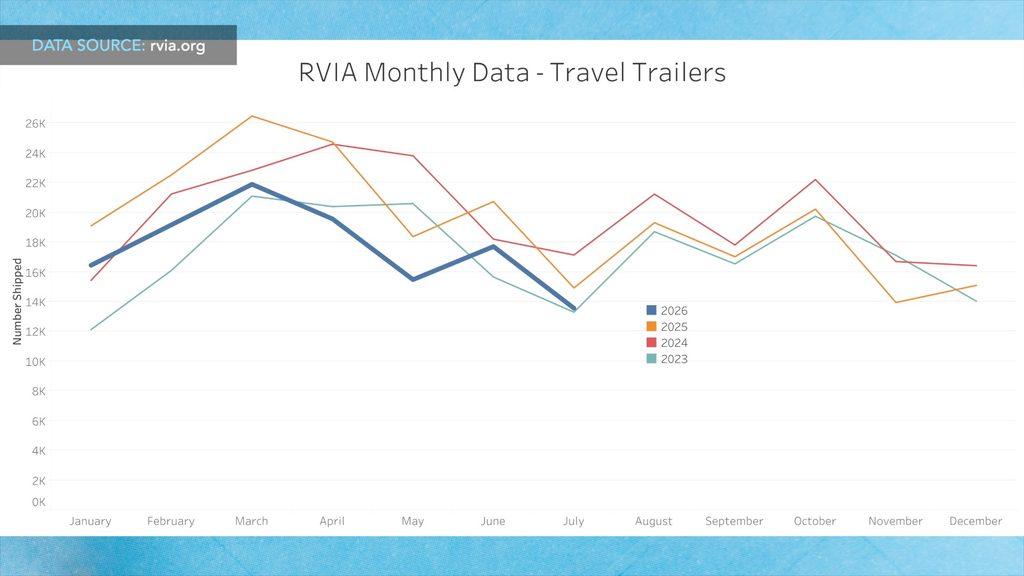
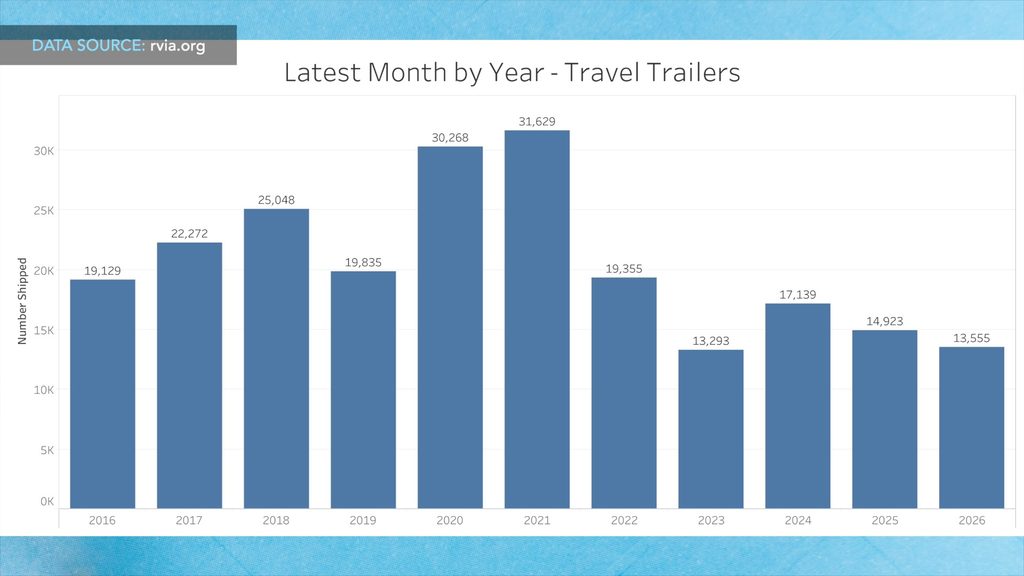
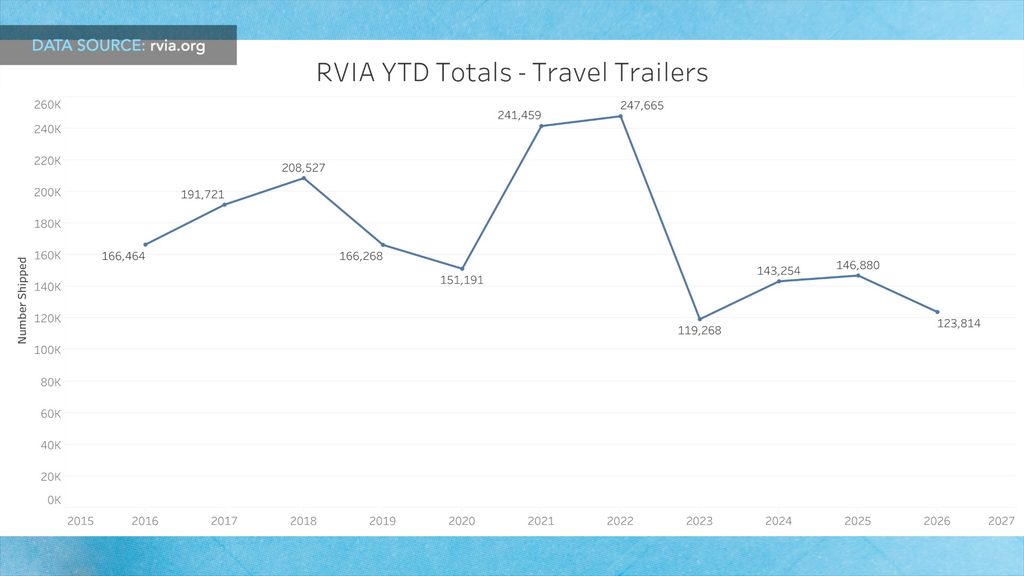
Travel trailer shipments decreased year-over-year, with 13,555 units shipped in July 2026, compared to 14,923 a year ago, representing a decrease of 1,368, or 9.2%. Looking at the July bar charts, travel trailers had their second lowest July on record since before 2016. Compared to Year-to-Date 2025 volume of 146,880, 2026 through July was down by 23,066 to 123,814, or down by 15.7%, the second lowest July YTD since 2016.
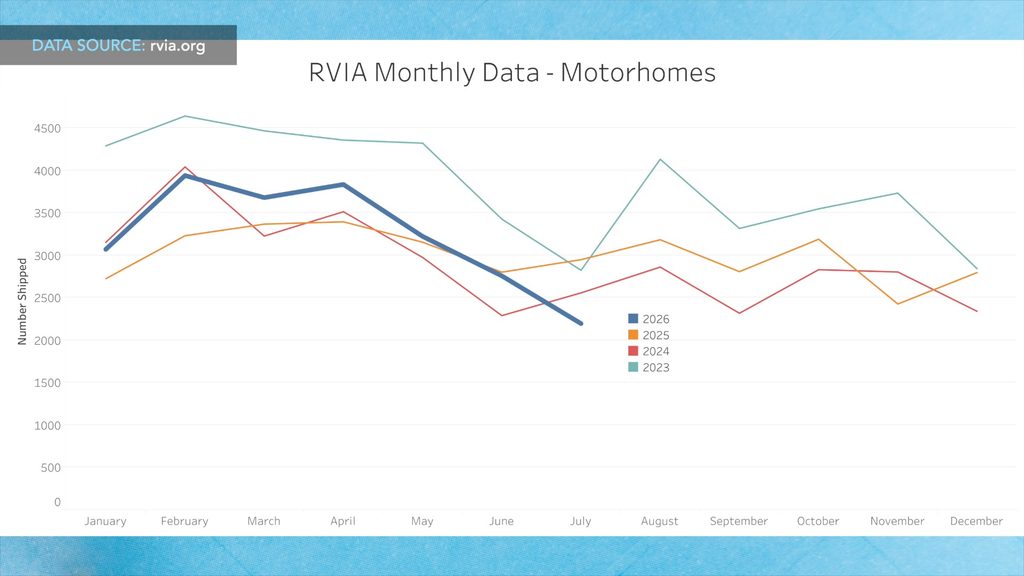
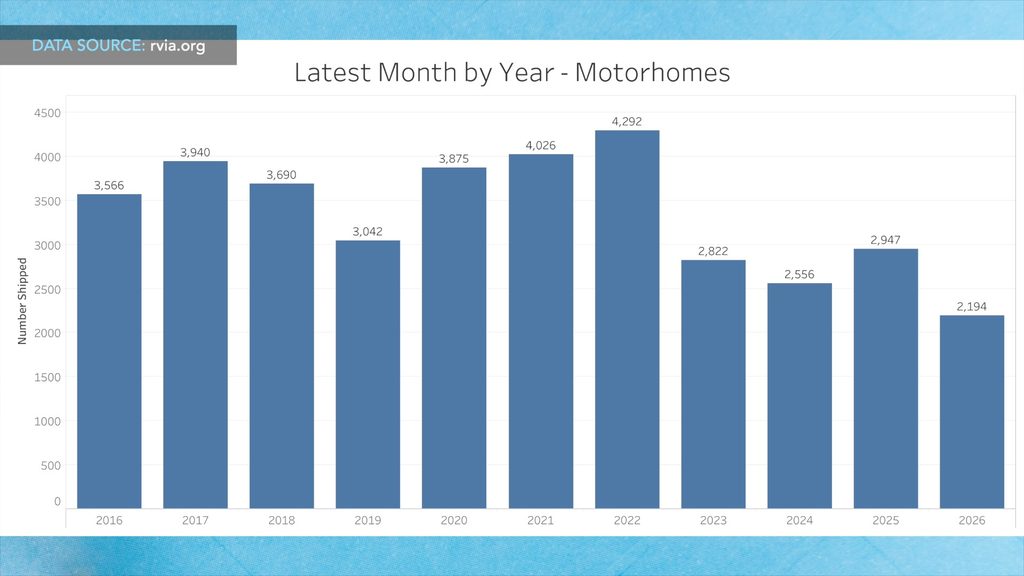
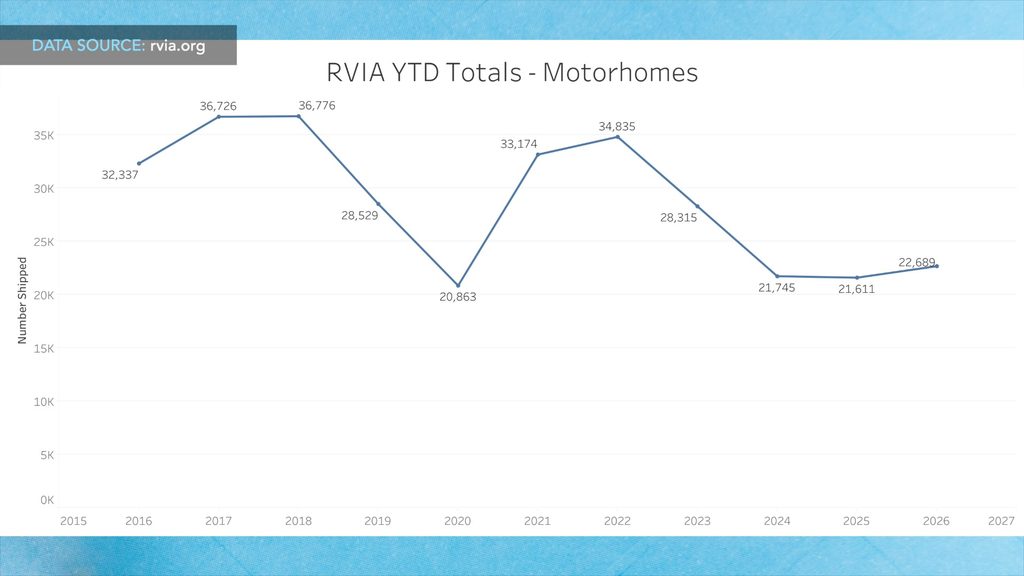
Motorhome shipments, which include Class A, B, and C motorhomes, were lower than in July 2025, with 2,194 units shipped versus 2,947 a year ago, a decrease of 753 or 25.6% year-over-year. Looking at the bar charts, motorhomes had their lowest July since before 2016. Compared to Year-to-Date 2025 volume of 21,611, 2026 through July was up by 1,078 to 22,689, or up by 5.0%.
RV Trader
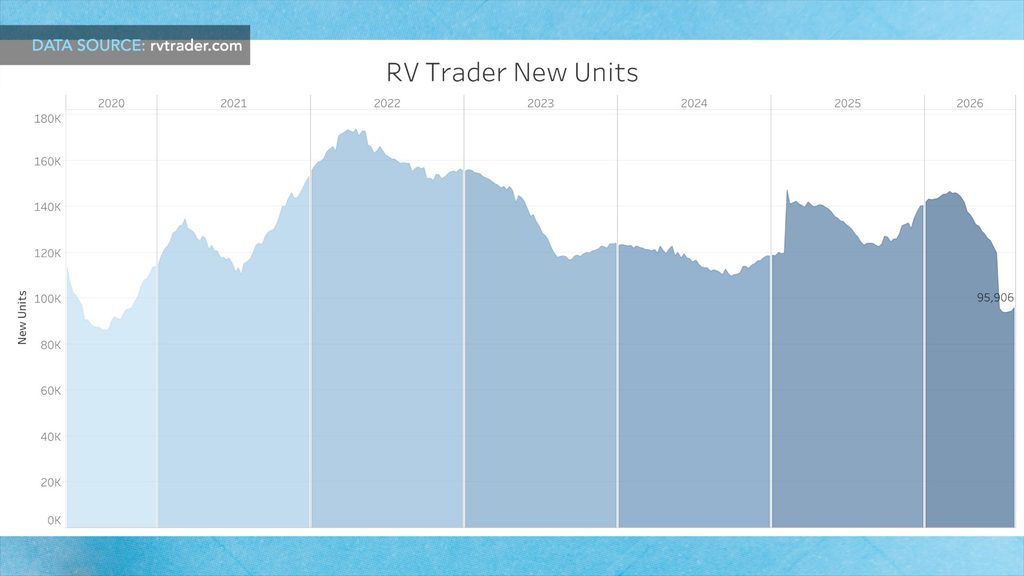
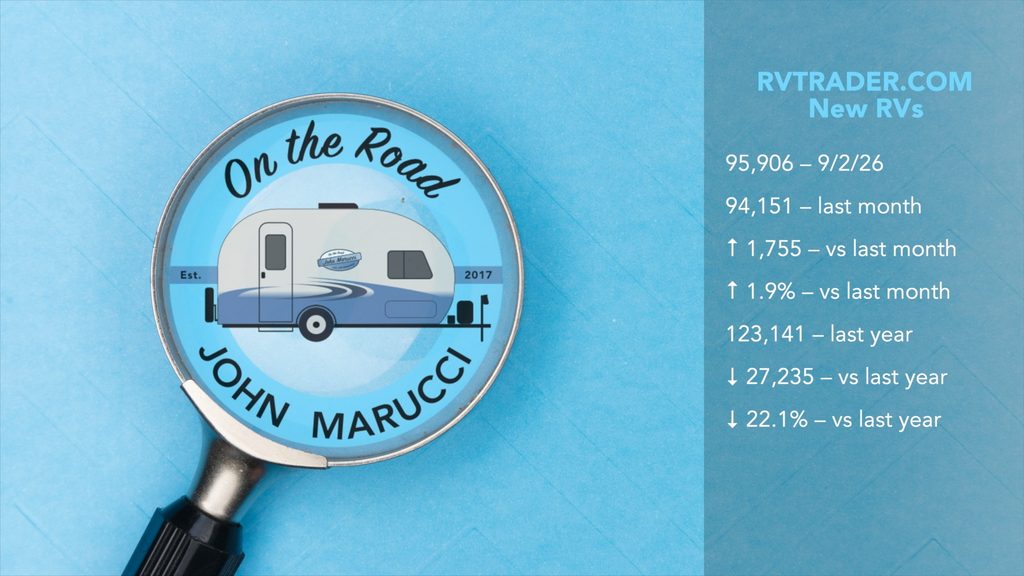
RVs for sale on RVTrader.com have increased since last month, with 95,906 new RVs listed as of September 2nd, 2026. This is up from 94,151, or 1,755 units, or 1.9% from a month ago, and down a large 27,235, or 22.1% from a year ago.
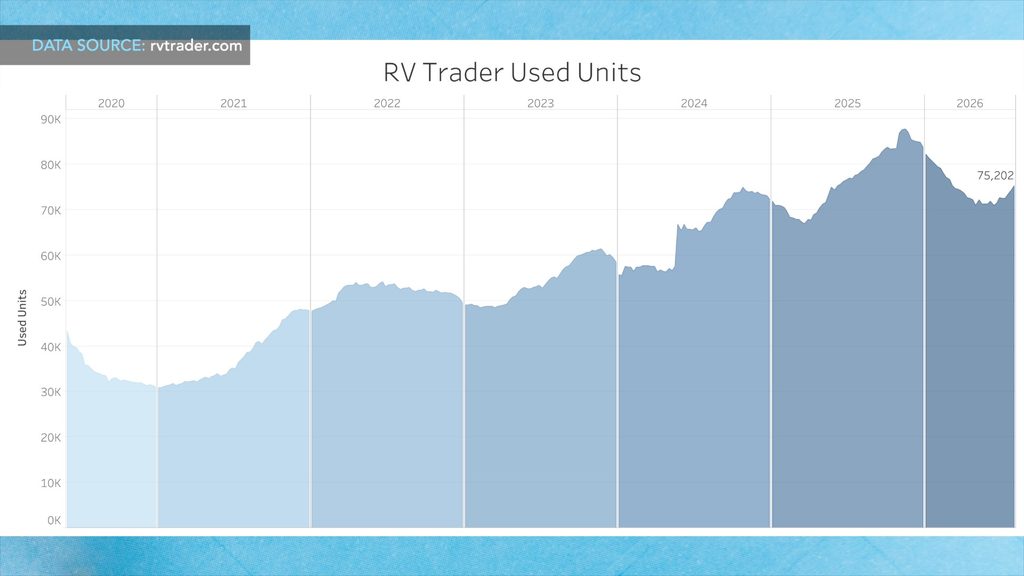
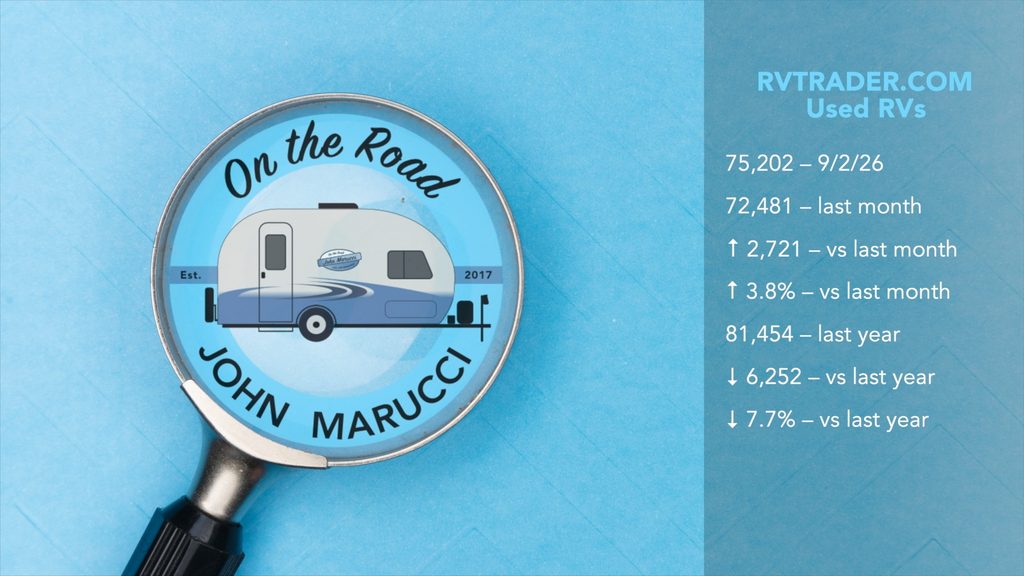
The number of used units for sale has increased since last month, with 75,202 used RVs for sale as of September 2nd. This is up by 2,721 units, or 3.8%, compared to about a month ago but down sharply by 6,252 units, or 7.7%, compared to a year ago. This is normal seasonality in play as RV owners tend sell after the camping season. We should see more used units for sale each week as we move toward the fall and winter.
Model Year Charts
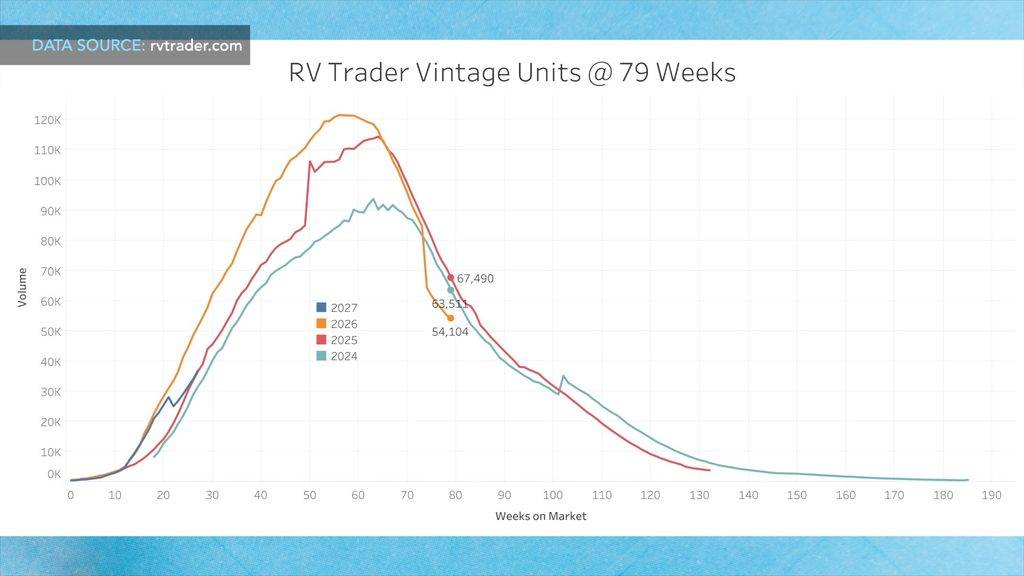
Our model year chart, based on weeks on market, shows that 2026 models (orange line) are falling off rapidly and are now well below 2025s at the same time on market. Looking at the graph, at the same 79 weeks on market, there are many fewer 2026 models vs. 2025s. Also, the blue line, which is the new 2027 models, are ramping up well below 2026s and in line with 2025s. It may be that the industry is pulling way back on production for the latest model year.
BLS RV Manufacturing Labor Stats
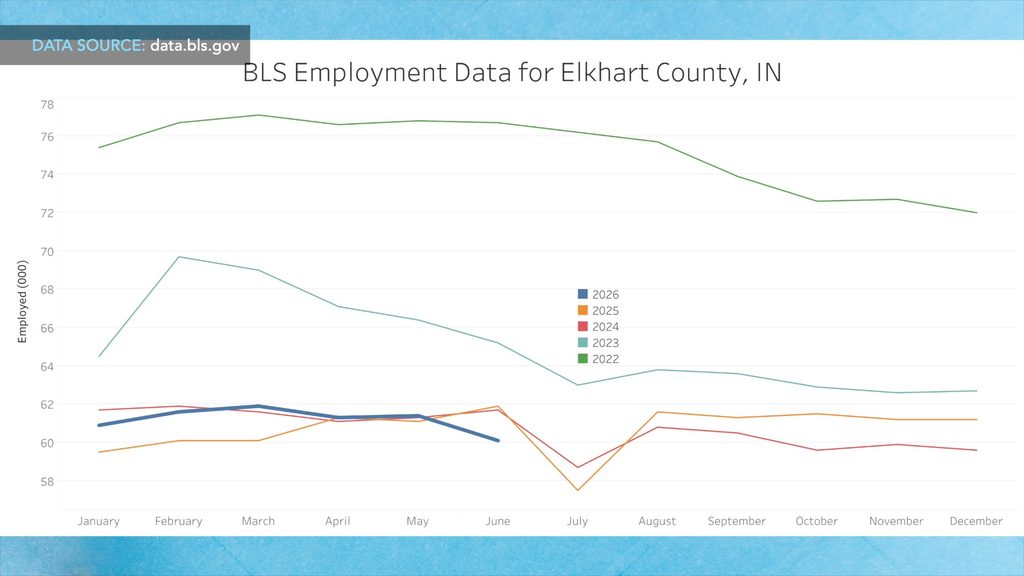
The Bureau of Labor Statistics published the latest manufacturing employment numbers for Elkhart County, Indiana. This is an indicator of RV manufacturing growth or decline. The June 2026 manufacturing employment level declined to 60,100, down 2.1% from 61,400 in May 2026 and down 2.9% from the June 2025 level of 61,900. The BLS is forecasting that manufacturing employment will decline to 59,800 for July 2026.
TSA Data – Recession Indicator?
Air travel has fallen in recent months. August showed a decline and is behind both 2025 and 2024. Air travel is down by 4.4% for August versus 2025 and down 3.4% versus 2024. Year-to-date 2026 is about 0.6% lower than YTD 2025. Air travel remains a useful leading indicator of economic activity and discretionary spending.
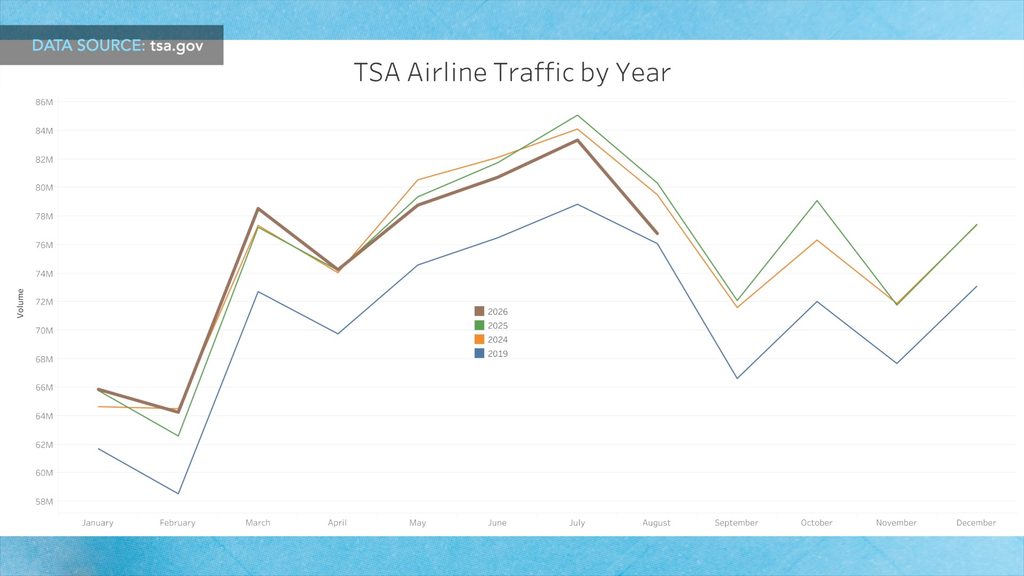
When comparing to pre-pandemic, August is still ahead of 2019, but only by 0.93%. Back in February we were 9.8% ahead. Oil jumped this spring, then jet fuel prices followed, and airline tickets followed a couple of months later. Travelers usually book one to two months out, so those late-spring higher fares showed up in August, and thus the decline in this month’s numbers.
If you peruse the latest Airline commentary, they don’t seem to be too worried. Airlines are still fine because the customer they are keeping is the corporate flyer, paying two to three times what a leisure traveler pays. Airlines are shedding the casual flyers with lower margins. What shows up in the TSA numbers are fewer travelers, not fewer dollars for the airlines. Business is booming with record investment spending on AI infrastructure and companies building out their U.S. capacity. Basically, AI spend is carrying GDP and increasing business activity. TSA data is a squeeze on discretionary travel, not a recession.
AAA
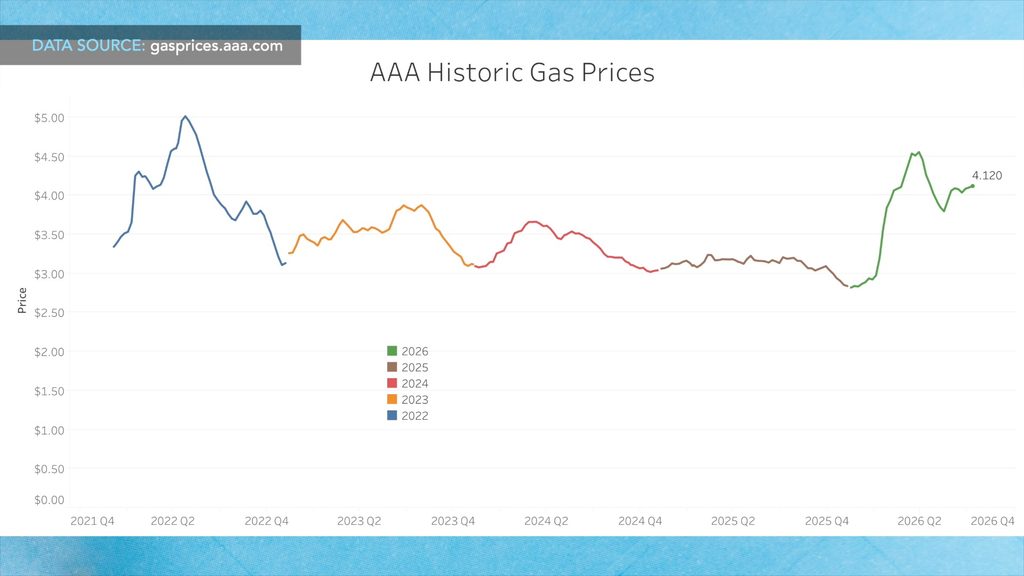
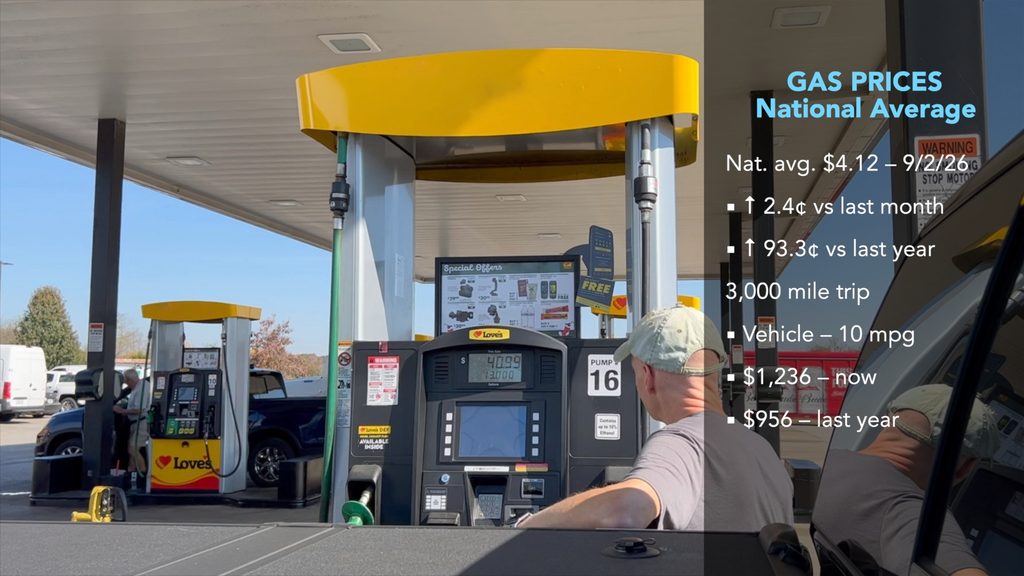
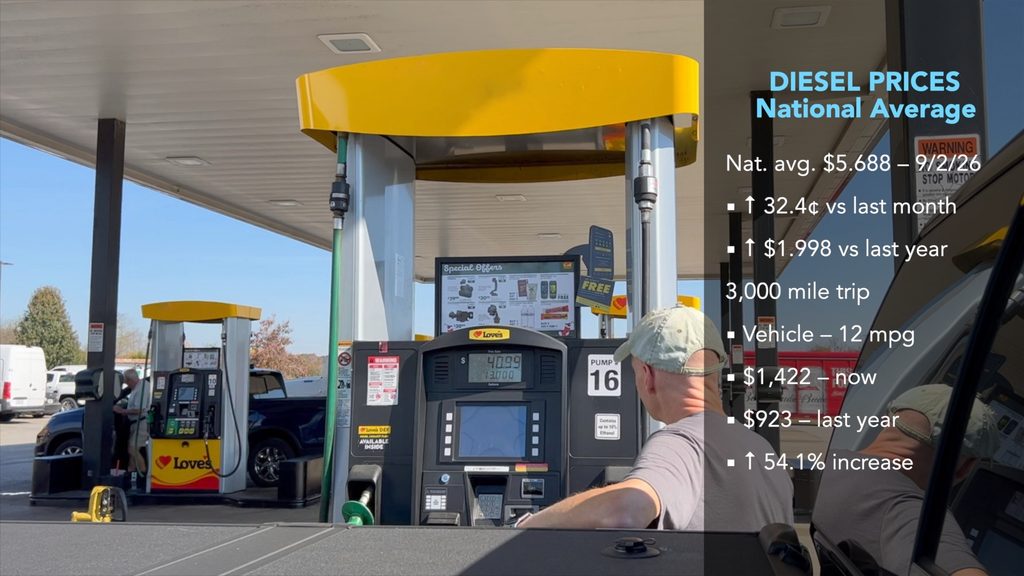
Gas prices have risen in the past month. According to AAA, the current average nationwide price as of September 2nd was $4.12 per gallon for regular unleaded, up 2.4 cents from a month ago and up 93.3 cents from a year ago. An RV trip of 3,000 miles at 10 mpg would cost $1,236 now vs. $956 a year ago, a 29.3% increase. Diesel prices have increased over the past month and currently stand at $5.688 per gallon, up 32.4 cents versus a month ago and up $1.998 from a year ago. A similar 3,000-mile trip, getting 12 mpg, would cost $1,422 now, compared to $923 a year ago, representing a 54.1% increase.
The Latest RV Industry News
Winnebago Downsizing
Likely the biggest story this past month was that Winnebago is permanently shutting down two factories and is consolidating production, with towables combining in the Grand Design facility in Middlebury, Indiana, and the motorized Class Bs moving to a sister location in Iowa. This is not a slowdown of a factory line, but a full stop to two production facilities. They are selling the physical production factory space.

So, why does it matter if production will run more efficiently with fewer plants? What this action says is that Winnebago has determined that go-forward production will be permanently lower and in light of this they won’t need the additional facilities. In essence, it is vote that the future is one with permanently less demand.
Winnebago CEO Mike Happe said, “These actions reflect our commitment to thoughtfully managing our manufacturing footprint, leveraging the strengths of our portfolio and deploying resources where they can create the greatest value. By taking proactive steps today, we are strengthening our ability to serve customers, support dealers and drive long-term growth across our brands.”
Tariffs
Let me take a minute to cover the U.S./Canada Tariff situation for RVs in the simplest possible non-political terms.
Let’s look first at northbound traffic. Canada has a 25 percent surtax on U.S. motor vehicles. Then it issued a remission of that surcharge and refunds that surcharge on conventional gas and diesel motorhomes. It does not apply to hybrid or electric units moving north. That order is still in force, and those motorhome codes have no expiration date. Travel trailers and fifth wheels were never in that motor-vehicle surtax. They classify as trailers, not as cars. So, as long as the purchaser (primarily Canadian-based RV dealers who resell U.S. built motorhomes) applies for the motorhome refund, the tariff is basically zeroed out.
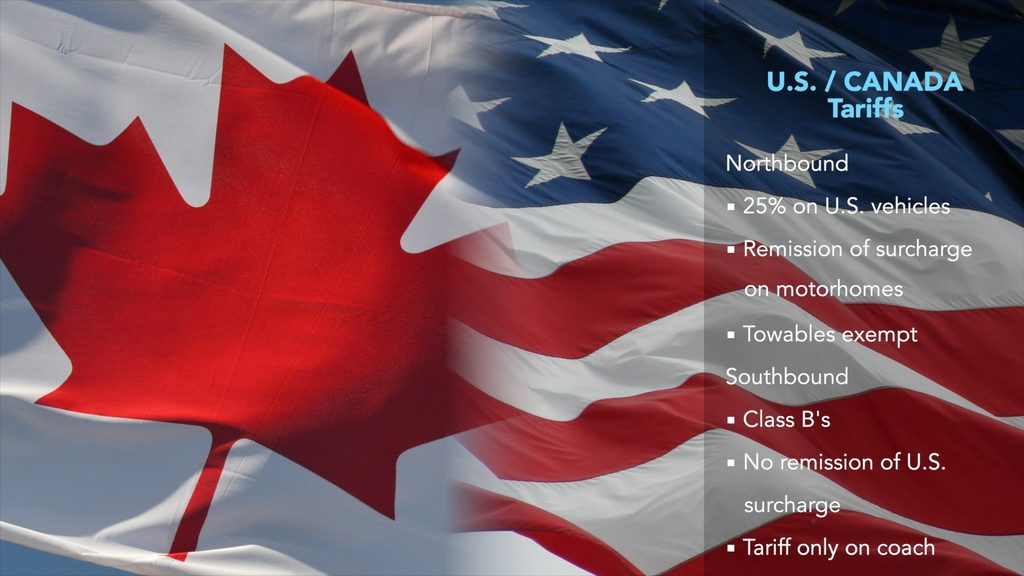
What about the high-quality Canadian built Class Bs like Leisure Travel Vans, Pleasure-Way, and Roadtrek, as an example, who sell a large portion of their production into the U.S.? Think of these Class Bs as two pieces glued together. The Sprinter or Transit van, often built in the United States. And the camper they build on it in Canada. Those finished coaches classify as motor vehicles, so they sit in the 25% U.S. auto tariff that started on April 3rd, 2025. The United States did not write a motorhome refund like Canada did. If the builder qualifies under the trade agreement, that extra 25 percent is supposed to hit only the camper part, not the van chassis that was U.S. built. The latest 50 percent round on selected Canadian goods did not add finished RVs, so it should not apply.

Here is a quick example on the Southbound Units (these are my made-up numbers):
- A Class B is sold for $175k in the U.S. but built in Canada
- It has a wholesale cost of $135k (what the U.S. dealer pays upon import)
- The Chassis, which is U.S made, costs $65k wholesale
- The Canadian cost contribution to build the coach is therefore $70k
- This $70k is what is tariffed at 25%, not the chassis portion
- The Tariff calculation is: $65k + ($70k *1.25) bringing the wholesale cost to $152,500
- The net tariff rate is therefore 13%
Whether the U.S. importing dealer passes this on or absorbs the 13% tariff has to do with competition and customer demand. Hopefully this sheds some light on the subject.
So, while there’s been a lot happening with tariffs in general, not all that much is new since April 2025 that hits RVs being built in the U.S. heading to Canada or for RVs built in Canada heading to the U.S.
GMI
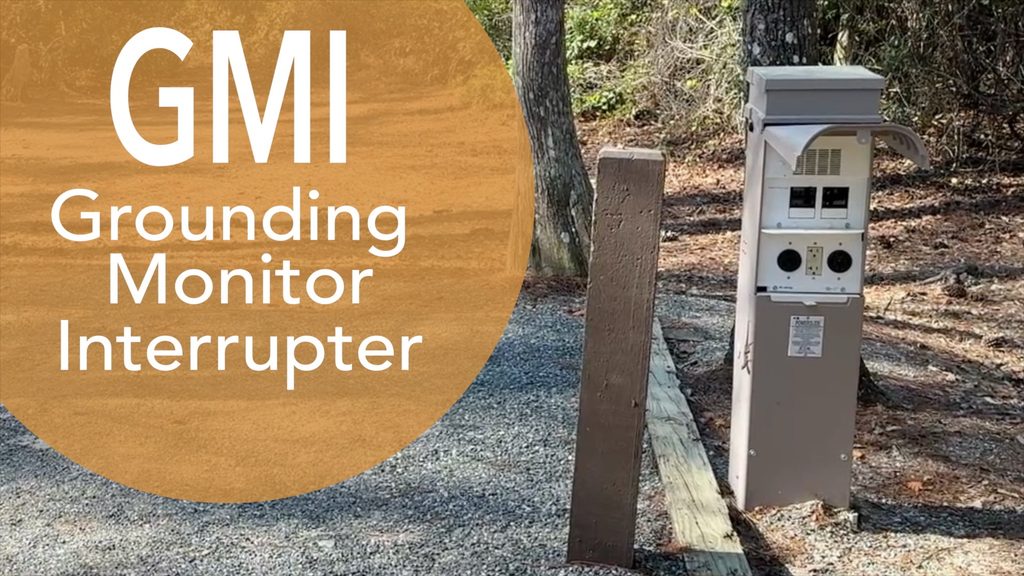
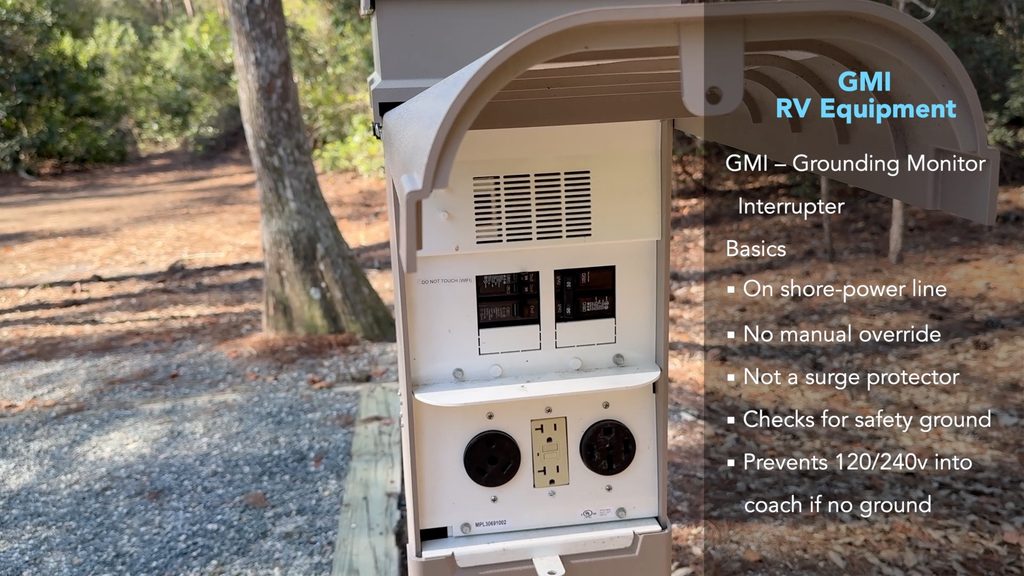
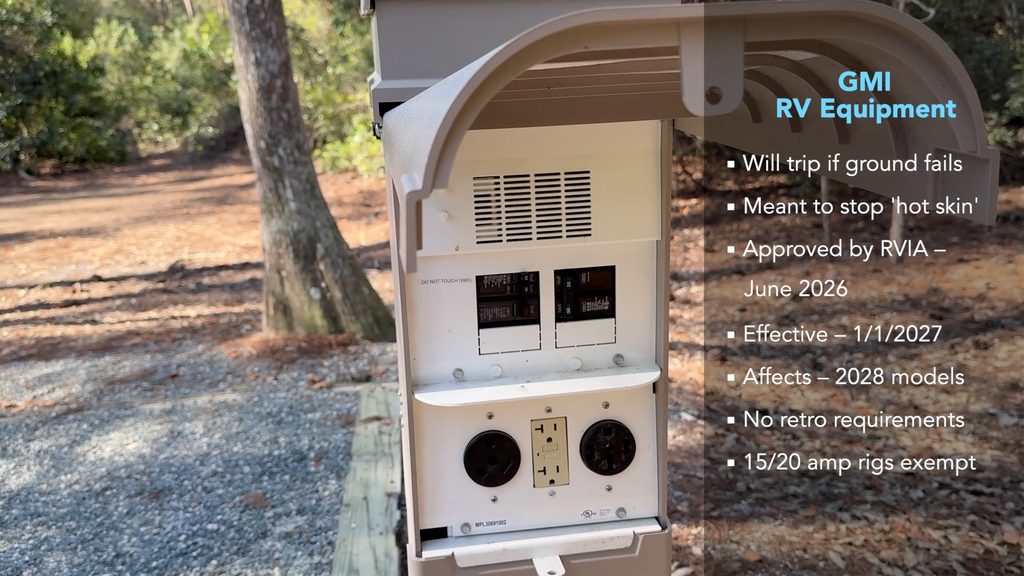
Something new will come as mandatory equipment on any new 2028 RV when they begin shipping in mid 2027. This is something you should know about, especially if you have plans to buy a new RV next year. The new piece of equipment is called a Grounding Monitor Interrupter, or GMI. It sits on the incoming shore-power line within the coach, there is no manual override, and it is not a surge protector. When you plug in to a campsite’s electrical pedestal, it checks that the campground pedestal has a real safety ground. If that ground is missing, weak, or carrying voltage, the GMI will not let 120 or 240 volt current into the coach. The unit will also trip if the ground fails while you’re plugged in. This is meant to stop hot skin, where the metal of the trailer can become live and shock you.
The RVIA’s board voted unanimously in June 2026 to approve the production mandate starting with new 2028 models. The requirement is effective January 1, 2027, and the RVIA will enforce it at the start of each manufacturer’s 2028 model year. The first 2028s should start showing up on dealer lots around mid-2027. Your current trailer is not required to add one, and smaller 15 amp and 20-amp-only rigs are outside this rule.
Here is what it could mean. At a campground where a pedestal worked last year on an older RV, it may refuse to work for your new 2028 RV. You would only find out at the campsite, after travel and when trying to plug in. If the campground isn’t aware of the mandate on new RVs, they may blame your new RV for things not working, given prior year models may still work.
The RVIA has not published a survey of private, KOA, state, or national-park pedestals. Some industry experts have called this an “unfunded mandate” pushed by the RVIA, where campground owners will need to react and possibly spend considerable funds to upgrade pedestals. Don’t get me wrong, I think every campground pedestal should be wired correctly, but in reality, there are many older campgrounds that either haven’t invested in their electrical systems in a while or can’t afford to.
That should do it. All the best in your camping adventures!
As always, thanks to our fans who support our efforts by starting their shopping from our Amazon Storefront and their generous financial support by using the THANKS feature located under each YouTube video ($ within the Heart icon). Your support is greatly appreciated!